
Spalding County Court Records After Arrest
After a Spalding County arrest, the jail and the court track different parts of the same event. The P2C Inmate Inquiry is the sheriff-linked custody tool. It shows current jail entries with the name, primary charge, arrest date, booking agency, and bond information when eligible. That is not the same as the formal court record. The court record begins when a case is opened in Magistrate, State, or Superior Court and the filed charge counts are placed in the clerk's case system.
The first facts often come from the jail side. A family member may see a primary charge in P2C, then check the Tyler/Odyssey Georgia Court Records Search for the filed case. A new arrest may not appear in Odyssey right away, and P2C itself can lag until a person is fully booked and the next scheduled update runs. For custody and booking detail, use Spalding County jail inmate records. For booking photos, use Spalding County jail mugshots.
Find Spalding County Court Records
The county's Clerk of Courts page links online case-file access through Tyler/Odyssey. Start there for court records after a jail arrest because the clerk route is the local public case-file path. P2C can help confirm spelling, arrest date, and charge wording before the court search. If the person was just booked, wait for the prosecutor and court workflow to create a filed case.
- Open the county-linked Tyler/Odyssey court records search portal.
- Search by defendant name, using the spelling shown in P2C when possible.
- Use a case number if it appears on a citation, warrant, bond paper, or clerk notice.
- Review the case court, charge counts, dates, hearings, bond orders, and disposition lines.
- Contact the Clerk of Courts or use Spalding County JustFOIA if an older record is not available online.
The Spalding County courts hub helps sort the court level. Magistrate Court handles first-appearance and warrant-related matters. State Court handles many misdemeanor and traffic cases. Superior Court handles felony cases and major criminal filings. The Griffin Judicial Circuit District Attorney handles felony prosecution, while the Spalding County Solicitor handles many State Court misdemeanor prosecutions.
The county-linked Tyler/Odyssey court search portal is the source shown in this captured court-search page.
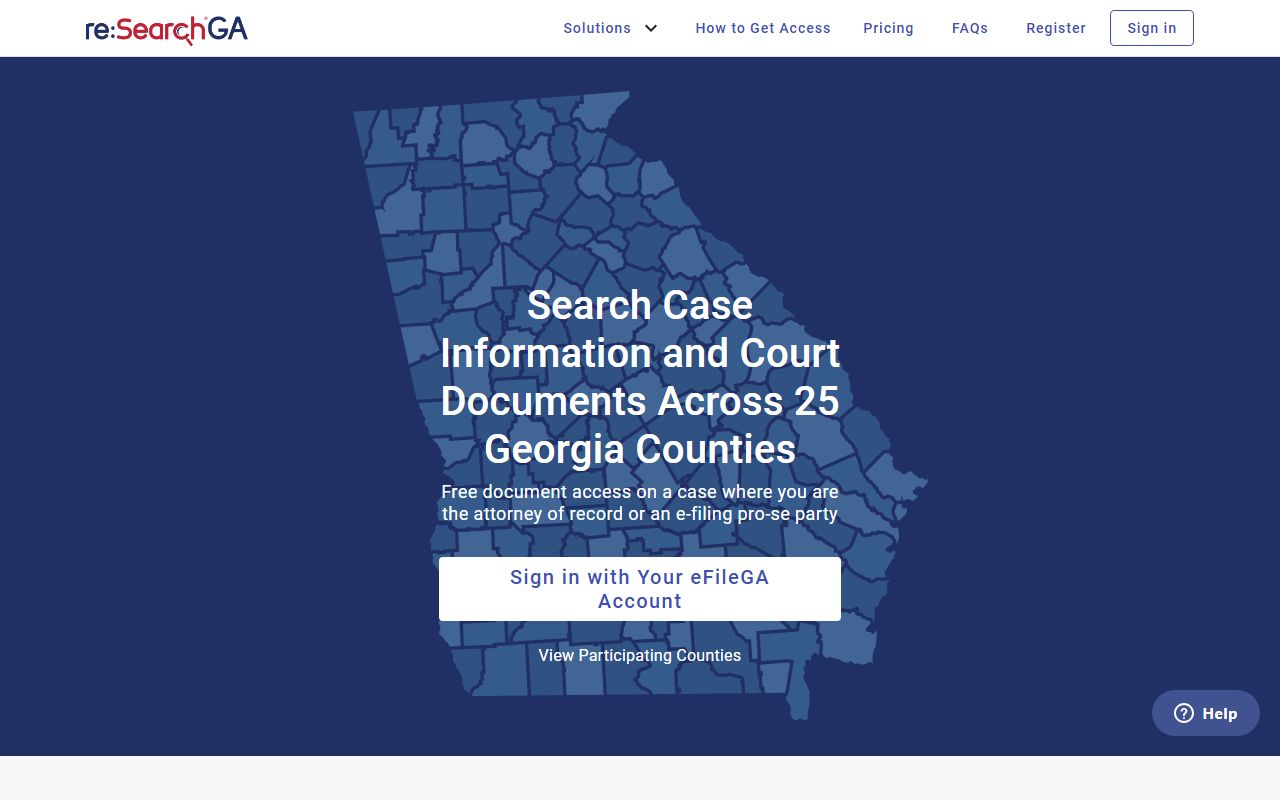
Use the portal for filed court cases, then use jail or records-request channels for booking material that has not become part of the case file.
Spalding County Court Search Fields
Static inspection of the Tyler/Odyssey portal did not expose every form field, but the research identified the expected search path for court records after an arrest. The strongest inputs are exact name, case number, and court or location filter. P2C is useful because the jail grid provides the display name, arrest date, primary charge, and booking agency before the court case is visible.
| Field | Type | Use | Notes |
|---|---|---|---|
| Defendant name | Name search | Primary lookup | Use the spelling from the jail roster or court papers. |
| Case number | Exact search | Best if known | May come from a citation, warrant, bond form, or clerk notice. |
| Court/location | Filter | Narrows results | Select the Spalding or Georgia case source if prompted. |
| Filing date | Date filter | Secondary | Helpful when the name is common and the arrest date is known. |
Charges Filed After Spalding Arrest
A jail charge is the arrest-side description entered from the arrest paperwork. A court charge is the formal allegation filed or presented in court. Those labels can match, but they can also change after prosecutor review. A misdemeanor may move through State Court and the Solicitor. A felony may move through Superior Court and the Griffin Judicial Circuit District Attorney. Magistrate Court may handle first appearance, bond, warrants, and preliminary steps.
| Document | Who Uses It | What It Does | Common Context |
|---|---|---|---|
| Complaint | Officer or prosecutor | Starts or supports a criminal allegation | Early arrest, warrant, or lower-court matters |
| Accusation or information | Prosecutor | States formal charge counts without a grand-jury indictment | Many misdemeanor or eligible felony paths |
| Indictment | Grand jury | Returns formal felony counts for Superior Court | Serious felony prosecution |
Formal court records after a jail arrest can include case number, parties, counts, filing dates, hearing entries, bond orders, disposition, and sentencing entries. A booking grid does not replace that case file. It is a starting point.
Spalding County Charge Status
Charge status terms explain where the court record stands. They should be read with care because one case can include several counts, and each count may have a different status. The sheriff's roster may continue to show a primary charge while the court file adds, amends, reduces, or dismisses counts. That is why court records after an arrest should be checked by count, not just by case caption.
| Status | Plain Meaning | Record Caution |
|---|---|---|
| Pending | The charge or case is still active. | No conviction has been shown by that status alone. |
| Amended or reduced | The charge changed from the original allegation. | Compare filed counts with the jail charge. |
| Dismissed | The charge ended without conviction. | Other counts in the case may still remain. |
| Nolle prosequi | The prosecutor declined or abandoned a count. | Often appears as "nol pros" or similar shorthand. |
| Bound over | A lower court sent the matter to another court. | Common when felony matters move toward Superior Court. |
Note: A charge is an accusation; a conviction requires a plea, verdict, or other final adjudication of guilt.
Bond After Spalding Arrest
Bond is part of both the custody path and the court path. The sheriff's bonding instructions say inmates arrested on Magistrate, State, or Superior Court charges who do not have bond set at arrest must go before a judge. If a Magistrate Judge cannot set bond, a bond hearing is scheduled. P2C and the bonding page direct users to Sheriff To Citizen for eligible bond amounts.
| Bond Type | How It Works in Spalding County |
|---|---|
| Cash bond | Paid in full by money order or certified cashier check made out to the sheriff's office, with a separate bond-fee payment. |
| Property bond | May use Spalding County property with enough equity, proper photo ID, and sheriff approval. |
| Out-of-county property bond | Started by the sheriff in the county where the property sits, sealed, and delivered to Spalding County within one day. |
| Professional bonding company | A licensed bonding company may post bond; the sheriff states it does not endorse a specific company. |
| No-bond hold | The person must see a judge or wait for a hearing before release by bond is possible. |
Warrants Before Court Records
A warrant can be the event that leads to a jail arrest and then a court record. Spalding County's P2C tools include a Warrant Search and a Wanted List. The warrant search can use name, race, sex, age range, address, city, and distance range fields. The wanted list can be browsed by last-name initial and may show charge, paper type, address, and agency.
Paper types captured from the warrant tools include arrest order, bench warrant, bondsman off bond, contempt of court, criminal arrest warrant, failure to appear, hold file, probation violation, protection order, and special presentment. Bench warrants and court-issued papers may also need a court or clerk check. Do not assume every warrant appears in a single public grid.
Charges, Convictions, Sealed Records
Two distinctions matter in Spalding County court records after arrest: charge versus conviction, and sealed versus restricted or expunged access. Georgia commonly uses "record restriction" language for eligible criminal-history limits. The Georgia Open Records Act still controls access to many public records unless an exemption applies, and juvenile matters, active investigations, sealed records, and restricted records may not be publicly available through the same path.
| Topic | First Term | Second Term |
|---|---|---|
| Charge vs. conviction | A charge is an accusation filed or tracked in the case. | A conviction is a final finding of guilt by plea, verdict, or judgment. |
| Sealed vs. restricted | A sealed record is hidden from public view by court rule or order. | A restricted Georgia record has public access limited when it qualifies under state law. |
| Jail record vs. court record | The jail record tracks custody, booking, bond, and current jail status. | The court record tracks filed charges, hearings, orders, disposition, and sentence. |
Spalding Court Records Fallbacks
If an online court record does not appear, use the access channel that matches the missing record. Court files route through the Clerk of Courts and Tyler/Odyssey. Jail booking records, incident reports, and booking material not visible online route through the sheriff or the Spalding County JustFOIA public portal. For custody confirmation tied to a court records after arrest search, call the jail at (770) 467-4286, call the sheriff's main line at (770) 467-4282, or use the sheriff office address at 401 Justice Blvd in Griffin. The sheriff also links the Spalding County Sheriff smartphone app, but the research did not confirm an app-only court-record search.
Formal statewide criminal-history checks are separate from both the jail roster and the court case index and may require consent, identification, and fees through authorized Georgia channels.
Georgia's Attorney General Open Government page and Open Government Guide explain the Open Records Act. The law does not mean every record is public at all times. It means agencies must process requests and apply any exemptions or production rules. Juvenile records, sealed court files, record-restricted entries, and active-investigation material require extra caution.
Important: Jail rosters and court indexes are not consumer reports and should not be used for FCRA-covered screening decisions.